In this article…
Learn how the Pillars of Relationships reveal the connections between traits and principles. Discover how balance creates ethical and relational harmony.
Mapping Interplay Between Behaviours and Core Principles
Introduction
Values, decisions, and behaviours do not exist in isolation. Each influences the others, shaping balance, purpose, and consistency.
The Pillars of Relationships form the second movement of the Jurnava Framework. They reveal that integrity is not built from individual strengths alone but from the relationships between those strengths. It is a structure of mutual support, where one behaviour reinforces another and where imbalance in one area can weaken the whole.
Psychologist Carl Rogers once observed that “The curious paradox is that when I accept myself just as I am, then I can change.” The Pillars of Relationships operate on that same paradox. Understanding the connections between our constructive and counterproductive behaviours is what allows meaningful transformation to take place.
Seeing Integrity as a Structure
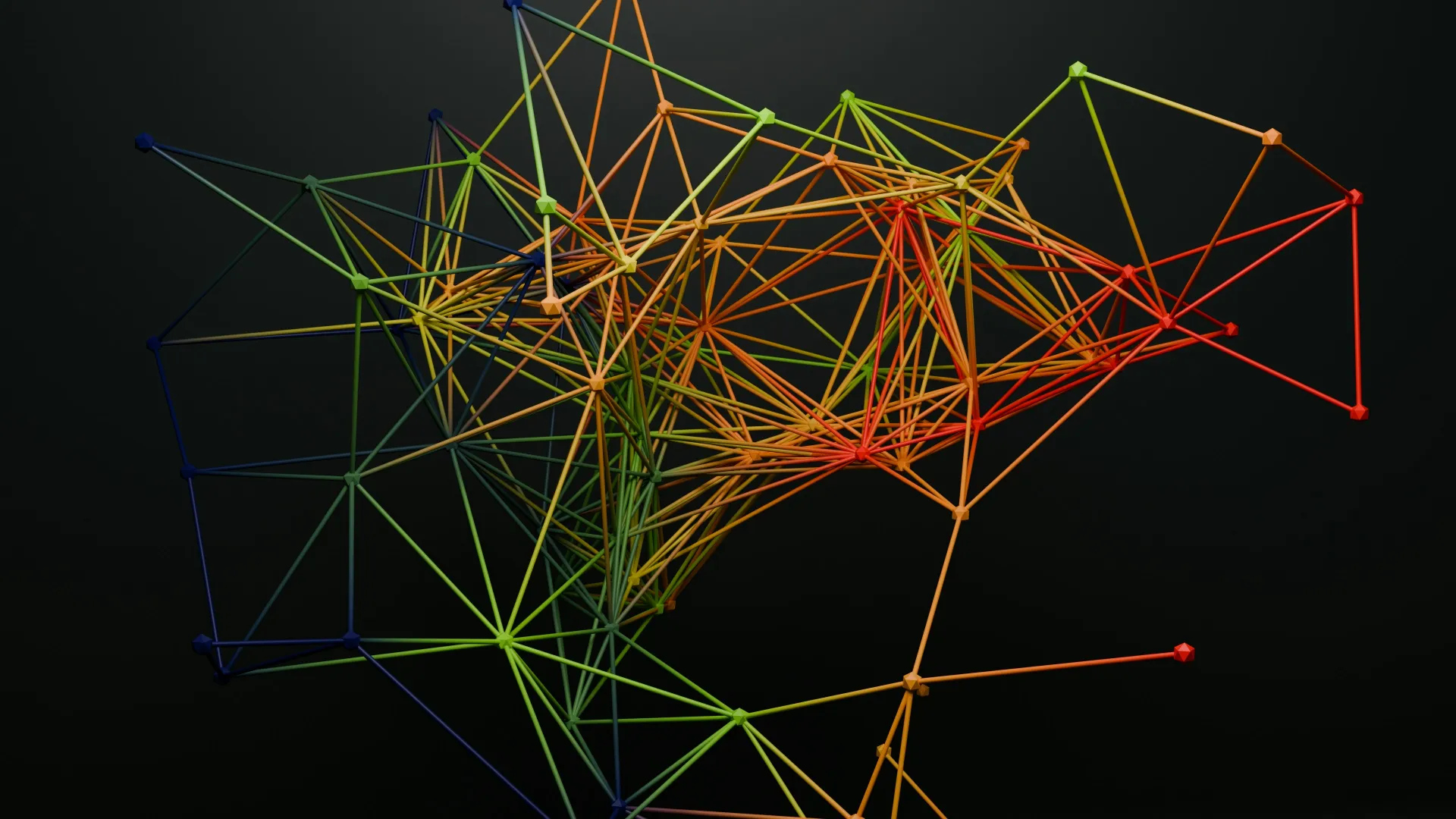
The concept behind this movement is simple yet powerful. Just as a building depends on the balance between its pillars, moral and behavioural life depends on the relationships between its traits and principles. Each supports, counterbalances, or transfers pressure to another.
Ethical consistency is not an individual quality but a network of interdependent actions. Systems thinker Peter Senge explained that “The real leverage in most management situations lies in understanding dynamic complexity, not detail complexity.” The same is true for personal development. Understanding the relationships between our traits gives us leverage to strengthen integrity across the whole structure rather than attempting to repair isolated pieces.
The Pillars of Relationships teach that stability comes from proportion. Harmony among the parts sustains the whole.
Layer A: Trait-to-Trait Dynamics – The Cross-Pressure Between Forces
The first layer of the Pillars maps the interplay between Constructive Traits and Counterproductive Traits. It examines how one strengthens or weakens the other, recognising that this influence flows in both directions.
For example, composure can calm jealousy, but unchecked jealousy can easily disrupt composure. Generosity can soften anger, yet unresolved anger can limit generosity. Each pair creates a form of cross-pressure that determines whether balance is maintained or lost.
Mapping these dynamics allows the identification of specific points where tension builds. It records which traits apply pressure, what triggers that pressure, the effect it creates, and how strong that effect is. Over time, these insights show clear behavioural patterns.
Carl Jung captured this reality when he said, “One does not become enlightened by imagining figures of light, but by making the darkness conscious.” The Trait-to-Trait map is where that consciousness begins. By naming both the constructive and counterproductive tendencies within us, the framework makes the invisible visible.
In practice, this mapping exposes how small imbalances ripple outward. When one trait is over-exercised or neglected, it influences others nearby. Recognising these relationships creates awareness, and awareness becomes the first step toward restoring proportion.
Read more about: The Trait-to-Trait Dynamics →
Layer B: Trait-to-Core Principle Links – The Relational Map of Alignment
The second layer brings the structure together. It connects the Traits defined in Layer A with the Core Principles established in the Compass of Values.
This process is done as one unified mapping. Each Core Principle is linked to the Constructive Traits that directly support it and, using the pairings from Layer A, to the corresponding Counterproductive Traits that undermine it. The result is a clear view of how behavioural patterns reinforce or erode each foundational value.
For instance, a principle centred on honesty might be upheld by traits such as self-control and accountability, yet challenged by tendencies toward impulsiveness or avoidance. When mapped, these relationships show precisely where integrity is at risk and which strengths to reinforce.
Philosopher Aristotle wrote that “We are what we repeatedly do.” This layer translates that insight into structure. It demonstrates that principles are not ideals existing above behaviour; they are sustained by it. The map shows where effort must be directed to preserve alignment across all areas of life or leadership.
Through Layer B, individuals and organisations gain a diagnostic view of their ethical system. When a principle falters, the framework identifies which behavioural relationships are out of balance. Correction becomes focused, measurable, and effective.
Read more about: The Trait-to-Core Principle Links →
The Purpose of the Pillars – From Awareness to Balance
The Pillars of Relationships bring visibility to the hidden architecture of behaviour. They teach that imbalance is not failure but information. Each tension reveals where energy, attention, or understanding is needed.
When people view their values and traits through this structural lens, they begin to see cause and effect more clearly. Organisational researcher Brené Brown has noted that “Integrity is choosing courage over comfort.” In the context of the Pillars, that courage is the willingness to examine discomfort honestly, to see how one behaviour influences another and how alignment can be restored.
The ultimate goal of this movement is balance. Through understanding the interplay between traits and principles, individuals develop proportion rather than perfection. They learn how stability is maintained not by eliminating weakness but by understanding and rebalancing it.
Summary
The Pillars of Relationships reveal that harmony is systemic. Each principle and behaviour depends on others to stand firm. The framework exposes the connections that hold ethical life together and provides a way to correct imbalance before the structure begins to strain.
Management consultant W. Edwards Deming stated that “A system must be managed; it will not manage itself.” The Pillars embody that truth. They provide the map needed to manage alignment, a system for maintaining proportion, awareness, and balance across every part of character and conduct.
When the pillars are in balance, integrity holds steady. When one begins to lean, awareness restores it. Through this movement, clarity becomes structure, and structure becomes stability.
You might also enjoy...
Newletter
Join our newsletter for the latest Jurnava insights and reflections.